
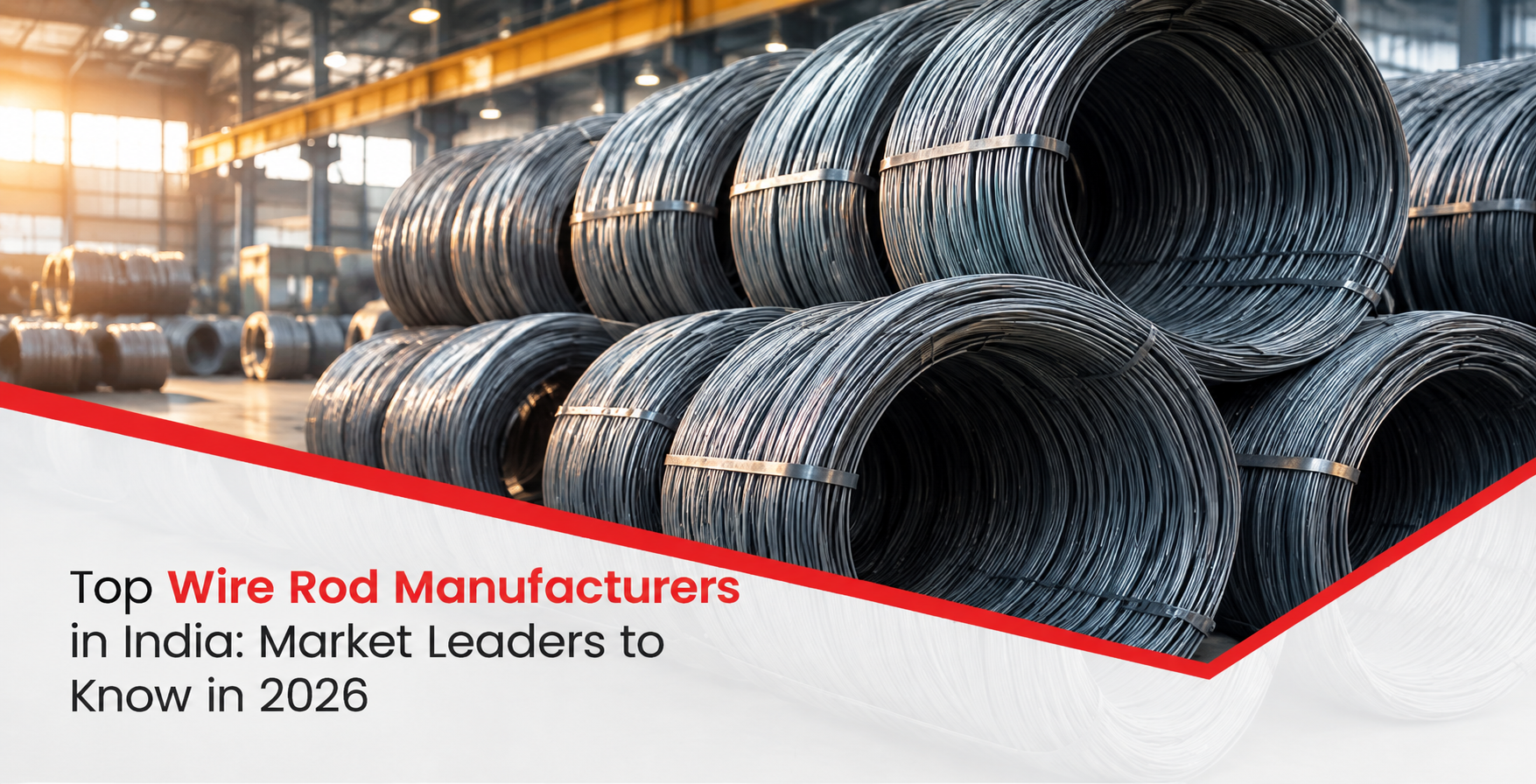
Top Wire Rod Manufacturers in India: Market Leaders to Know in 2026
Wire rod buyers in India have more choice today than they did a decade ago, but not all of it comes down to scale. Some manufacturers win on integrated capacity, others on how closely they’ll work with a buyer’s exact chemistry requirement. This rundown covers the names that consistently come up, and what actually separates them.
Why This Industry Looks the Way It Does
Wire rod feeds straight into wire drawing operations, which then supply automotive parts, fasteners, construction mesh, and dozens of other downstream products. India’s steel sector has grown large enough that several producers now run serious wire rod capacity alongside their core steelmaking. That’s pushed competition on both volume and specialisation, which is good news for buyers who know what to look for.
Tata Steel
Founded in 1907, Tata Steel is about as established as Indian steel gets. Wire rod comes out of its Jamshedpur and Kalinganagar plants, feeding automotive, construction, and industrial buyers both at home and abroad. Decades of integrated operations give it consistency few newer entrants can match.
JSW Steel
JSW runs its wire rod line out of Vijayanagar, and the company has leaned toward high-strength, low-alloy grades. Domestic manufacturers use it heavily, and export volumes have grown alongside that.
Rashtriya Ispat Nigam Limited
RINL operates as Vizag Steel, and being a public sector enterprise hasn’t slowed its wire rod output. Infrastructure, automotive, and engineering buyers rely on it for customised specifications, backed by an integrated plant that’s been running for years.
Jindal Steel and Power
JSPL’s wire rod output sits inside a much broader steel portfolio, which gives it room to flex across grades. Engineering and construction buyers make up much of its customer base.
Rashmi Metaliks
Kolkata-based and founded in 2004, Rashmi Metaliks is younger than most names on this list but has built a wire rod business around fasteners and automobile components. Its vendor network focuses on dimensional precision across a wide size range.
Adukia Industries
Adukia Industries takes a different route, hot rolling billets on continuous rolling mills to produce wire rods built to specific chemistry and mechanical requirements. Over five decades in iron and steel manufacturing sit behind this, plus a combined production capacity of 1 million MTPA across group companies. The company supplies wire drawing mills both in India and abroad, and wire rod is just one piece of a wider product line that includes TMT bars, sponge iron, and ERW pipes.
What Actually Separates These Manufacturers
Size gets a lot of attention, but it isn’t the whole story. The companies that hold their position year after year tend to run integrated production from billet through to finished coil, test batches consistently, and stay flexible on chemistry rather than pushing one standard grade at every buyer. A cheaper rod that fails a consistency check ends up costing more than it saved.
Which One Fits Your Order
Big integrated producers make sense for high-volume, standardised orders where export reach matters. Manufacturers with a tighter regional footprint, Adukia Industries among them, tend to offer more direct back-and-forth on custom specs and quicker turnaround for domestic buyers. Order volume and how specific your chemistry requirement is should drive the decision more than brand recognition alone.
FAQs
1. Who are the largest wire rod manufacturers in India?
Tata Steel, JSW Steel, RINL, and JSPL are among the largest integrated producers. Rashmi Metaliks and Adukia Industries operate on a more specialised scale.
2. Which industries buy the most wire rod from Indian manufacturers?
Automotive, construction, fastener manufacturing, and general engineering account for most domestic demand.
3. What makes Adukia Industries stand out as a wire rod manufacturer?
Over five decades of steel manufacturing experience, a combined production capacity of 1 million MTPA, and wire rods built to specific chemistry and mechanical properties for wire drawing mills.
4. Is it better to buy from a large integrated producer or a specialised manufacturer?
It depends on what you need. Large producers suit high-volume standard orders. Specialised manufacturers often work better for custom chemistry and faster turnaround.
5. Do Indian wire rod manufacturers sell internationally?
Yes. Tata Steel, JSW Steel, and Adukia Industries all supply wire rod to buyers outside India, alongside their domestic customer base.

Recent Post
Hot Briquetted Iron (HBI) vs Sponge Iron: A Detailed Comparison
Thu October 2026
Why Traceability Matters When Sourcing Steel Billets for Industrial Applications
Mon October 2026
Top Wire Rod Manufacturers in India: Market Leaders to Know in 2026
Fri September 2026
What to Check When Buying ERW Steel Pipes for Industrial Use
Tue September 2026
Categories