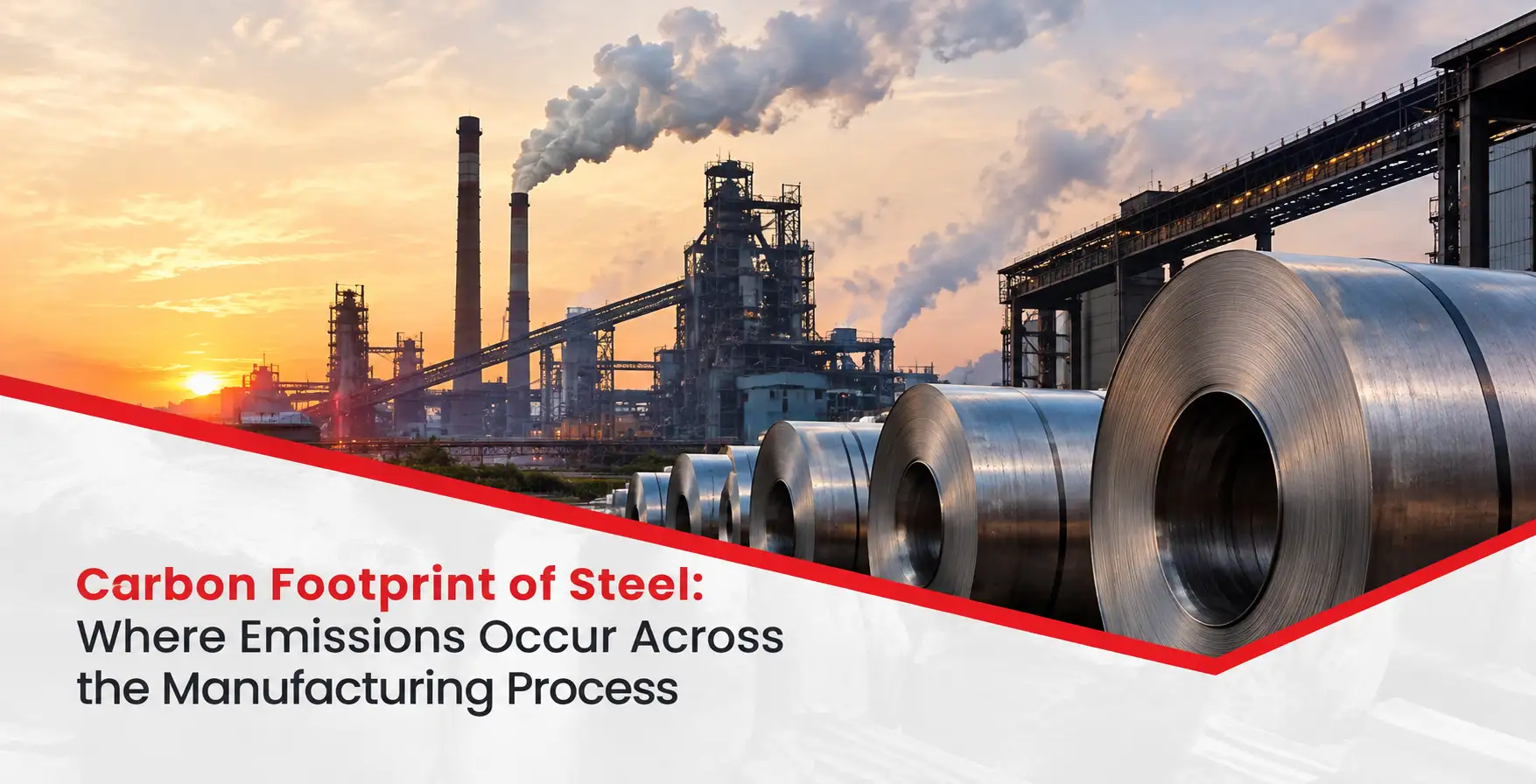
Carbon Footprint of Steel: Where Emissions Occur Across the Manufacturing Process
Steel doesn’t pick up carbon at one single point. It builds up in stages, from the ore stockpile all the way to the finished bar leaving the plant gate. A blended, single-number carbon figure hides more than it reveals. Buyers asking real questions need to know which stage actually drives the total.
Mining and Beneficiation
Before any furnace gets involved, ore has to be extracted and upgraded. Diesel-powered excavators, crushers, and haul trucks run through this stage, and most of that machinery still burns fossil fuel. Beneficiation, turning raw ore into a usable feed, adds more energy demand on top. This part of the chain gets left out of a lot of simplified carbon math, but the emissions are real.
Pelletisation
Iron ore fines get converted into pellets inside a rotary kiln, and that kiln needs to hold high, sustained temperatures. Coal or natural gas usually supplies that heat, which makes pelletisation one of the heavier energy steps before reduction even starts. Adukia Industries runs a pelletisation unit under Tech AIC DRI Pellets, feeding iron ore pellets into the group’s sponge iron production.
Direct Reduction: Where Sponge Iron Comes From
Most of a steel plant’s process emissions trace back here. Producing sponge iron means stripping oxygen out of iron ore at high heat, using coal or gas as the reducing agent. Coal-based DRI, which dominates much of India’s steel sector, generally runs a heavier carbon footprint than gas-based routes. Coal simply releases more CO2 per unit of energy burned.
Ferro Alloy Production
Making ferro alloys, used to adjust steel’s properties, involves high-temperature smelting, often through electric arc furnaces. How much carbon this stage adds depends almost entirely on where the electricity comes from. A furnace running on coal-fired captive power carries a different footprint than one drawing from a cleaner grid mix.
Furnace Operations in Steelmaking
Sponge iron, scrap, or pig iron reaches the furnace next, electric arc, induction, or basic oxygen, and melting it down takes a lot of power or fuel. For electric arc and induction furnaces, that means the carbon footprint rides almost entirely on how the electricity was generated. Coal power and renewable power don’t leave the same mark here.
Rolling and Finishing
Turning billets into TMT bars, wire rods, or coils means reheating the steel and running it through rolling mills. This stage burns fuel or electricity too, though usually less than reduction and primary steelmaking. A well-run continuous rolling line tends to use less energy per tonne than older batch-style rolling.
Transport
Emissions keep adding up after the plant gate. Raw materials come in, finished products go out, often over hundreds of kilometres by road or rail. How much this adds depends heavily on where a plant sits relative to its ore sources and its customers.
Where Most of the Footprint Actually Sits
Direct reduction and primary steelmaking carry the biggest share across most integrated operations. These stages involve the heaviest chemical reduction and the most energy input, by a wide margin. Rolling, finishing, and transport matter, but they’re a smaller slice of the total.
What This Means in Practice
Cutting a steel product’s carbon footprint isn’t a one-stage fix. It runs through how ore gets sourced, how the reduction furnace is fuelled, how the melting furnace gets its power, and how efficiently the rolling mill operates. A cleaner captive power mix can shift a plant’s overall number more than people expect, compared to running entirely off an external grid.
Adukia Industries runs 45 MW of captive power across its group units, alongside sponge iron, pelletisation, and rolling operations inside the same group. Producers who control more of this chain internally tend to have a clearer read on where their emissions actually sit, rather than depending on suppliers whose processes stay opaque from the outside.
FAQs
1. Which part of steelmaking produces the most emissions?
Direct reduction and primary steelmaking, generally. Both need heavy energy input to reduce iron ore and refine the metal into steel.
2. Is coal-based sponge iron worse for carbon emissions than gas-based DRI?
Usually, yes. Coal releases more CO2 per unit of energy than natural gas, so coal-based DRI tends to carry a heavier footprint.
3. Does captive power lower a plant’s carbon footprint?
It depends on the fuel behind it. Captive power running on cleaner fuel can lower the overall number. A coal-fired captive plant won't offer the same benefit.
4. How much do transport and logistics add to steel’s carbon footprint?
Some, but usually less than the production stages. It comes down to how far a plant sits from its raw material sources and its customers.
5. Why does pelletisation carry a notable carbon cost?
The rotary kiln needs sustained high heat, typically from coal or gas, which makes this step one of the more energy-heavy stages before reduction even begins.
Written and Verified by:

Recent Post
Carbon Footprint of Steel: Where Emissions Occur Across the Manufacturing Process
Sun October 2026
Hot Briquetted Iron (HBI) vs Sponge Iron: A Detailed Comparison
Thu October 2026
Why Traceability Matters When Sourcing Steel Billets for Industrial Applications
Mon October 2026
Top Wire Rod Manufacturers in India: Market Leaders to Know in 2026
Fri September 2026
Categories