
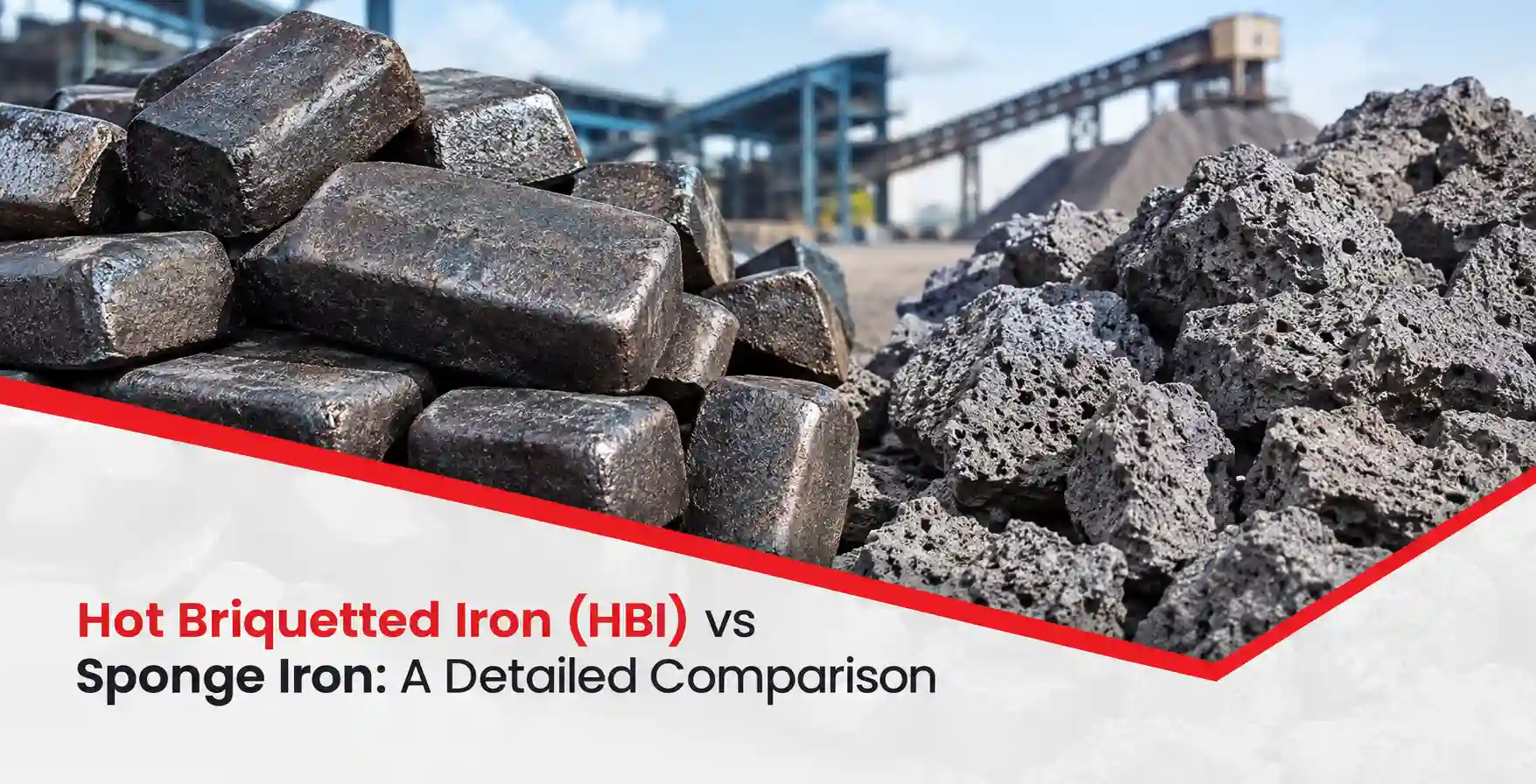
Hot Briquetted Iron (HBI) vs Sponge Iron: A Detailed Comparison
Plant managers rarely choose HBI over sponge iron for chemical reasons. Logistics decides it. It’s about how far the material has to travel and how long it needs to sit in a stockyard before it goes into a furnace. Both products come from the same direct reduction process. What happens right after reduction is where they part ways.
What Sponge Iron Actually Is
Sponge iron comes from removing oxygen from iron ore, without melting it. The finished material is porous, which is where the name comes from. It leaves the reduction furnace and goes to market largely untouched, with no compaction or further processing. Adukia Industries manufactures sponge iron for use as metallic charge in electric arc and induction furnaces, feeding steel producers across the country.
What Hot Briquetted Iron Is
HBI starts out identical to sponge iron. Same ore, same reduction process. The difference happens afterward, while the reduced iron is still hot. It gets pressed into dense briquettes under high pressure, which cuts down porosity and surface area compared to loose sponge iron.
That compaction step exists to solve one specific problem: sponge iron’s tendency to react with air and moisture during storage.
Where the Two Actually Differ
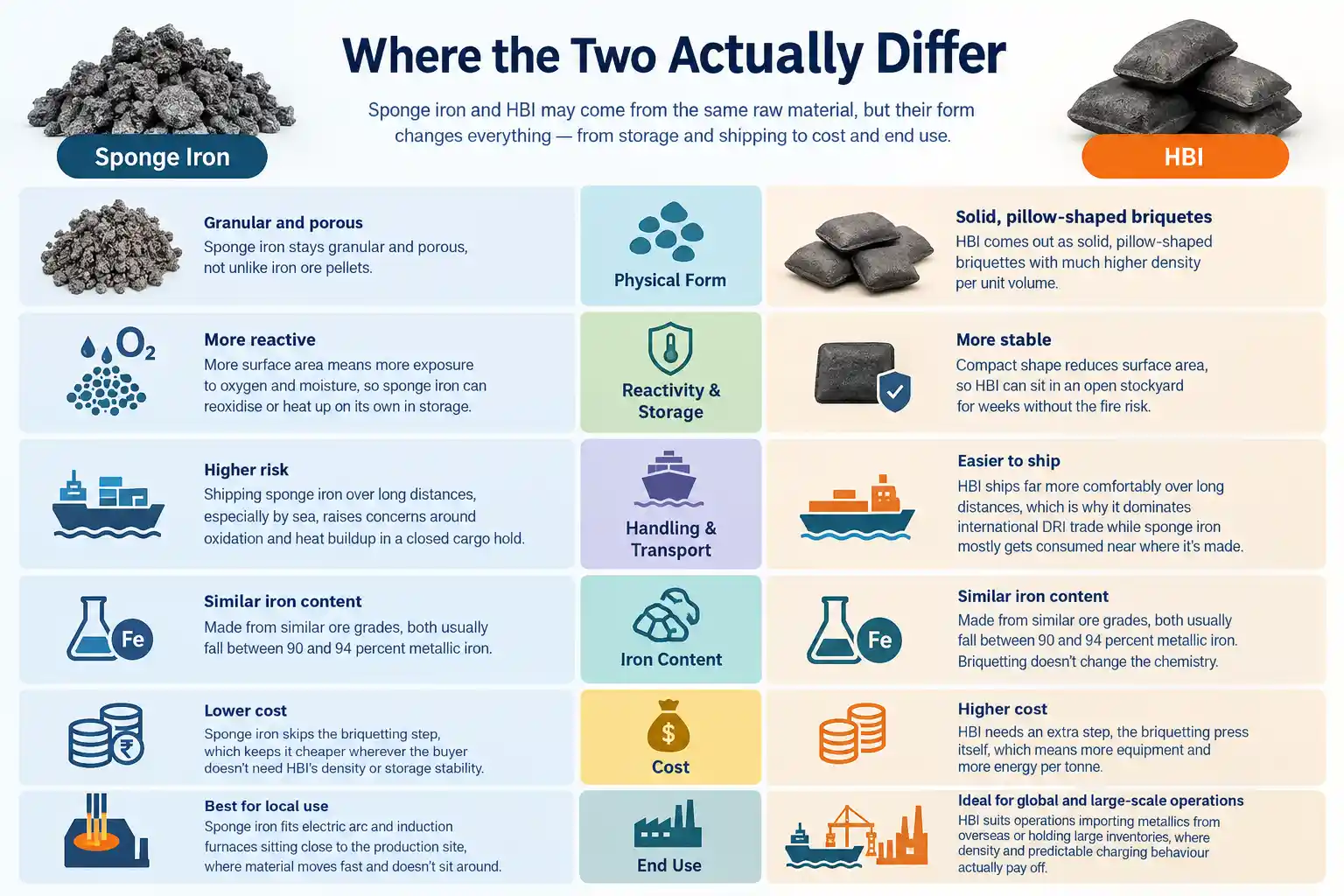
Physical form is the most visible difference. Sponge iron stays granular and porous, not unlike iron ore pellets. HBI comes out as solid, pillow-shaped briquettes with much higher density per unit volume. Everything else, shipping cost, furnace charging behaviour, storage risk, traces back to this one distinction.
Reactivity follows from the same root cause. More surface area means more exposure to oxygen and moisture, so sponge iron can reoxidise or, under the wrong conditions, heat up on its own while sitting in storage. Compact the material into briquettes and that surface area drops sharply, along with the reactivity that comes with it. HBI can sit in an open stockyard for weeks without the fire risk sponge iron carries.
Handling and transport show the same pattern. Shipping sponge iron over long distances, particularly by sea, raises real concerns around oxidation and heat buildup inside a closed cargo hold. HBI ships far more comfortably over those same distances, which is largely why it dominates international DRI trade while sponge iron mostly gets consumed near where it’s made.
Iron content isn’t the dividing line between them. Made from similar ore grades, both usually fall between 90 and 94 percent metallic iron. Briquetting doesn’t touch the chemistry at all. It only changes the shape, so any performance gap in the furnace comes down to how the material charges, not what it’s made of.
Cost tells a simpler story. HBI needs an extra step, the briquetting press itself, which means more equipment and more energy per tonne. Sponge iron skips that step entirely, which keeps it cheaper wherever the buyer doesn’t need HBI’s density or storage stability.
End use follows logistics more than anything. Sponge iron fits electric arc and induction furnaces sitting close to the production site, where material moves fast and doesn’t sit around for long. HBI suits operations importing metallics from overseas or holding large inventories, where density and predictable charging behaviour actually pay off.
Making the Choice
A steel plant a short drive from its sponge iron supplier, with fast furnace turnaround, gains little from paying extra for briquetting it doesn’t need. A plant importing metallics or holding weeks of inventory is a different case entirely; HBI’s lower reactivity and easier handling justify the added cost there.
Adukia Industries produces sponge iron built for exactly the first scenario, short logistics chains and quick furnace turnaround, backed by a combined production capacity of 1 million MTPA across its group companies.
FAQs
1. What’s the core difference between HBI and sponge iron?
HBI gets compacted into dense briquettes after direct reduction. Sponge iron stays in its original porous, granular form. That compaction is what gives HBI its lower reactivity and better transport stability.
2. Is HBI the better choice over sponge iron?
It depends on the operation. HBI works better for long-distance transport and extended storage. Sponge iron works fine, and cheaper, for plants located near the production site with quick turnaround.
3. Does HBI carry more iron than sponge iron?
Not really. Both typically fall in the 90 to 94 percent metallic iron range when made from similar ore grades. The real difference is physical form, not iron content.
4. Why does sponge iron need careful storage handling?
The porous structure means more surface area touches air and moisture. That raises the chance of reoxidation, and in some cases, the stored material heats up on its own.
5. What sponge iron does Adukia Industries produce?
Adukia Industries makes sponge iron as metallic charge for electric arc and induction furnaces, supplying steel producers across India.

Recent Post
Hot Briquetted Iron (HBI) vs Sponge Iron: A Detailed Comparison
Thu October 2026
Why Traceability Matters When Sourcing Steel Billets for Industrial Applications
Mon October 2026
Top Wire Rod Manufacturers in India: Market Leaders to Know in 2026
Fri September 2026
What to Check When Buying ERW Steel Pipes for Industrial Use
Tue September 2026
Categories