
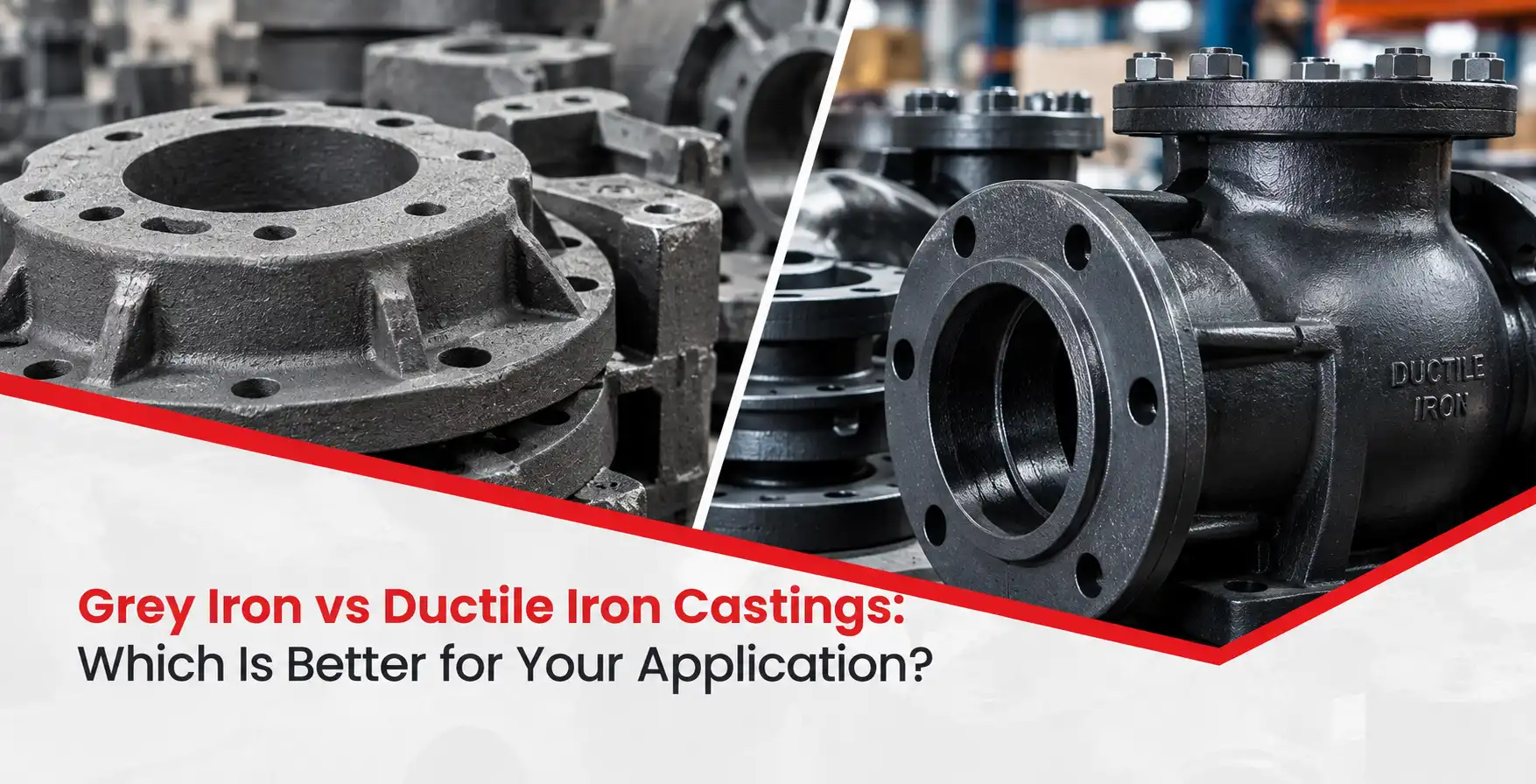
Grey Iron vs Ductile Iron Castings: Which Is Better for Your Application?
Pick the wrong casting material and a part fails long before its expected service life ends. Pick the right one and it outlasts the machine it’s bolted to. That’s the real stake behind choosing between grey iron and ductile iron, two materials that look similar on a spec sheet but behave very differently under load.
This comparison between grey iron castings and ductile iron castings walks through where each one actually performs best, so the choice comes down to engineering fit rather than guesswork.
What Makes Grey Iron Different
Grey iron gets its name, and its grey fracture surface, from graphite flakes distributed through the metal matrix. Those flakes are what give grey iron its character. They damp vibration well, machine easily, and hold up under compressive loads without much fuss. What they don’t do well is resist sudden impact or bending stress, since the flake structure creates natural stress points where cracks can start.
That combination makes grey iron a strong fit for engine blocks, pipe fittings, machine bases, and other components that sit under steady compressive load rather than repeated flexing.
What Makes Ductile Iron Different
Ductile iron, also called nodular iron, starts from the same base material but ends up with a completely different internal structure. Instead of flakes, the graphite forms into spherical nodules. That shape change removes most of the stress concentration points that limit grey iron, which is why ductile iron handles tension, impact, and repeated flexing far better.
Gears, crankshafts, and heavy-duty pipe systems rely on ductile iron for exactly this reason. Anywhere a part needs to bend slightly under load and spring back without cracking, ductile iron tends to be the better choice.
Grey Iron Castings vs Ductile Iron Castings: Key Differences
Tensile strength : Ductile iron carries meaningfully higher tensile strength than grey iron, largely because of its nodular graphite structure. Grey iron’s flake structure limits how much tension it can absorb before a crack propagates.
Ductility and impact resistance : This is where the naming makes sense. Ductile iron deforms under stress before it fails, giving early warning and some margin of safety. Grey iron tends to fracture with little warning once its limit is reached.
Vibration damping : Grey iron actually wins here. Its flake graphite structure absorbs vibration more effectively, which is exactly why it remains the standard choice for machine bases and engine components where damping matters more than flexibility.
Machinability : Grey iron machines more easily and at lower tool wear than ductile iron, a practical advantage for high-volume production runs.
Cost : Grey iron is generally the more economical option, both in raw material and processing. Ductile iron’s added mechanical properties come with a moderate cost premium, justified where the application genuinely needs the extra strength.
Matching the Material to the Application
Municipal infrastructure is a good example of how this choice plays out in practice. Manhole covers, surface boxes, valve boxes, trench grates, and meter boxes all need to handle repeated traffic loading and occasional impact, conditions where ductile iron’s toughness generally outperforms grey iron’s brittleness.
Industrial applications split more evenly. Gear box housings and motor body frames often benefit from ductile iron’s impact resistance, while static machine bases or housings under steady compressive load can perform well with grey iron at a lower cost. Counterweights, depending on the loading pattern, can go either way based on the specific engineering requirement.
What Adukia Industries Offers in Castings
Adukia Industries, through its AIC Casting unit established in 1971, manufactures both grey iron and ductile iron castings to ASTM, DIN, EN, and BIS standards. The unit’s product range spans municipal castings, including manhole covers, surface boxes, valve boxes, trench grates, and meter boxes, alongside industrial castings such as gear box housings, motor body frames, and counterweights.
With decades of foundry experience across both material types, Adukia Industries works with customers to determine which casting material fits a given load condition, rather than defaulting to one material across every application.
Making the Final Call
There’s no universal answer to grey iron versus ductile iron. Grey iron suits static, compression-heavy applications where machinability and cost matter. Ductile iron suits dynamic, impact-prone applications where toughness and tensile strength carry more weight. The application’s actual loading conditions, not a general preference for one material, should drive the decision.
FAQs
Written and Verified by:

Recent Post
Grey Iron vs Ductile Iron Castings: Which Is Better for Your Application?
Thu November 2026
Carbon Footprint of Steel: Where Emissions Occur Across the Manufacturing Process
Sun October 2026
Hot Briquetted Iron (HBI) vs Sponge Iron: A Detailed Comparison
Thu October 2026
Why Traceability Matters When Sourcing Steel Billets for Industrial Applications
Mon October 2026
Categories