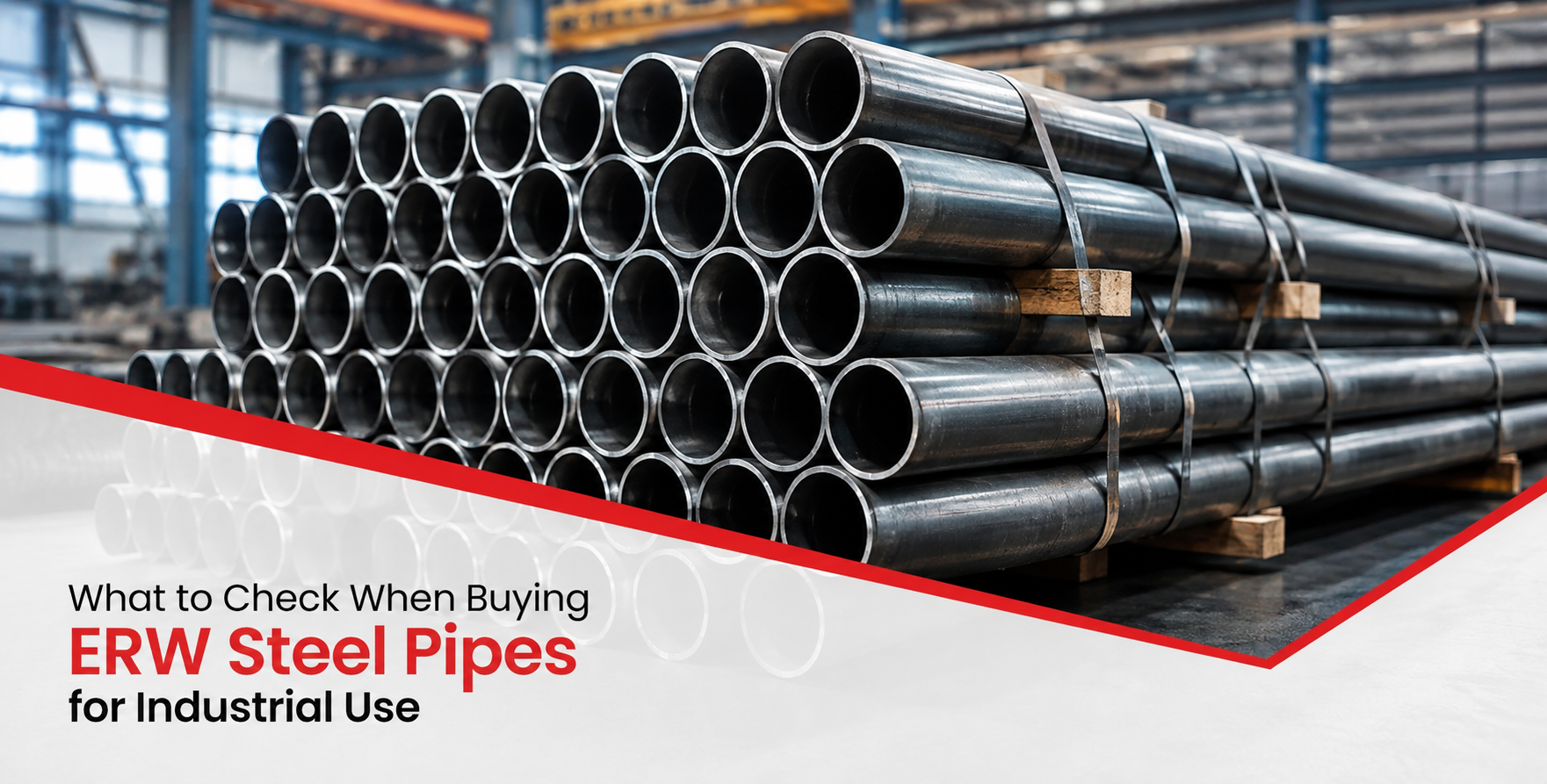
What to Check When Buying ERW Steel Pipes for Industrial Use
Pipes rarely fail with warning. A weld seam gives way under pressure without any signal beforehand. Wall thickness that was always a shade thin finally gives out mid-project. That’s the uncomfortable truth about industrial piping. By the time a problem surfaces, it usually costs far more to fix than it would have to prevent.
ERW steel pipes are everywhere in construction, plumbing, and oil and gas work. They’re strong and economical to produce. But quality swings widely between suppliers. So before placing an order, a few things deserve real attention.
What Exactly Is an ERW Steel Pipe?
ERW stands for Electric Resistance Welded. A steel strip gets rolled into shape first. The seam is then fused using electric resistance heat, not filler metal. Just heat and pressure do the work.
Done correctly, this produces a strong, near-seamless pipe with consistent wall thickness throughout. That’s why ERW steel pipe remains the standard choice across many industrial applications. Adukia Industries manufactures these pipes for exactly this kind of demand, built for conditions that leave no room for error.
Why Quality Checks Actually Matter
Two ERW pipes can look nearly identical in a warehouse. Same colour, same diameter, similar shine. Yet one might last fifteen years under pressure, while the other cracks within eighteen months.
Skip the verification step, and consequences tend to follow quickly. Pipes need replacing sooner than planned. Safety risks emerge on sites carrying gas or pressurised fluid. Projects face delays when a batch fails inspection midway through. None of it is cheap, and none of it is necessary with proper checks upfront.
What to Actually Check Before You Buy
Material grade and chemical composition
This is where verification should start. Carbon content, manganese levels, sulphur, and phosphorus decide how the pipe behaves under stress. Lower carbon generally means better weldability, though exact figures matter more than general rules. Always ask for a mill test certificate. A verbal assurance carries no real weight without paperwork behind it.
Wall thickness and outer diameter
Small deviations here can throw off pressure ratings in ways that aren’t obvious immediately. Match the OD and thickness against your actual engineering drawings. Don’t rely on what a supplier calls standard. Adukia Industries produces ERW pipes with an OD range of 25mm to 75mm and wall thickness between 1.4mm and 3.5mm, adjusted to project requirements.
Certifications that actually carry weight
ASTM, DIN, EN, and BIS aren’t decorative logos on a brochure. They confirm the pipe underwent recognised testing protocols. A supplier without these certifications is a warning sign worth taking seriously.
The weld seam itself
Every ERW steel pipe carries one seam that was once molten metal. It’s often the weakest point if the process has been rushed. High-frequency induction welding produces a tighter, more reliable seam than older methods. Ask what welding technology the manufacturer genuinely uses, not what marketing material claims.
Surface finish and protective coating
A clean surface isn’t purely cosmetic in nature. It affects flow resistance in fluid-carrying pipes and long-term rust resistance. For pipes exposed to moisture or chemicals, ask about coating or galvanising options.
Length and cutting flexibility
Standard stock lengths work fine for some projects. Others need something more specific to the job. Cutting pipe on-site often weakens the ends and slows installation. It helps to confirm upfront whether cutting to length is offered.
Whether the pipe suits your application
A pipe built for fencing differs from one meant for oil transport. Structural framing, plumbing, and gas lines each carry different demands. Match the specification to the job at hand, not the reverse.
The supplier’s actual track record
Anyone can claim quality on paper. Few can back that claim with decades of manufacturing history behind them. Adukia Industries has produced iron and steel products since 1971, running a combined capacity of 1 million MTPA across its group units. That continuity tends to show up in batch-to-batch consistency, which matters most at volume.
Reports Worth Requesting
Before finalising the order, ask for these documents:
- Tensile strength test results
- Hydrostatic pressure test data
- Flattening and flaring test reports
- Chemical composition certificate
These aren’t bureaucratic paperwork for its own sake. They prove the pipe has actually been tested, not simply assumed to perform well.
Where Adukia Industries Fits In
Adukia Industries has spent over five decades in steel manufacturing. ERW pipes form one part of a much wider product range that includes TMT bars, sponge iron, billets, and wire rods. The pipes are longitudinally welded from high-grade strip and coil, built for construction, plumbing, and oil and gas industries.
A Final Word
None of this needs to be complicated. Check the chemical composition carefully. Confirm the certifications are genuine. Request test reports before delivery, not after installation begins. And choose a supplier whose history actually holds up under scrutiny.
Adukia Industries has built that history over fifty years. Its ERW steel pipes for industrial use reflect the same manufacturing discipline applied across the company’s entire product line.
FAQs
1. How is an ERW pipe different from a seamless pipe?
An ERW pipe forms through welding a rolled steel strip along its length. A seamless pipe has no weld joint at all. ERW pipes tend to cost less and suit most industrial needs where extreme pressure isn't the main concern.
2. Where are ERW steel pipes typically used?
They appear across construction, plumbing, and oil and gas work. Fencing and structural framing also rely on them heavily, particularly where dependable strength matters more than unusual specifications.
3. What sizes does Adukia Industries offer in ERW pipes?
The range runs from 25mm to 75mm in outer diameter. Wall thickness falls between 1.4mm and 3.5mm, adjusted to customer specifications as needed.
4. How can I verify an ERW pipe meets proper standards?
Look for ASTM, DIN, EN, or BIS certification on the product. Always request mill test certificates covering composition, tensile strength, and pressure testing results.
5. Can ERW pipes be customised for specific project needs?
Yes, this is fairly standard practice today. Adukia Industries, like most established manufacturers, offers customisation in length and specification based on actual project requirements.
Written and Verified by:

Recent Post
Carbon Footprint of Steel: Where Emissions Occur Across the Manufacturing Process
Sun October 2026
Hot Briquetted Iron (HBI) vs Sponge Iron: A Detailed Comparison
Thu October 2026
Why Traceability Matters When Sourcing Steel Billets for Industrial Applications
Mon October 2026
Top Wire Rod Manufacturers in India: Market Leaders to Know in 2026
Fri September 2026
Categories