
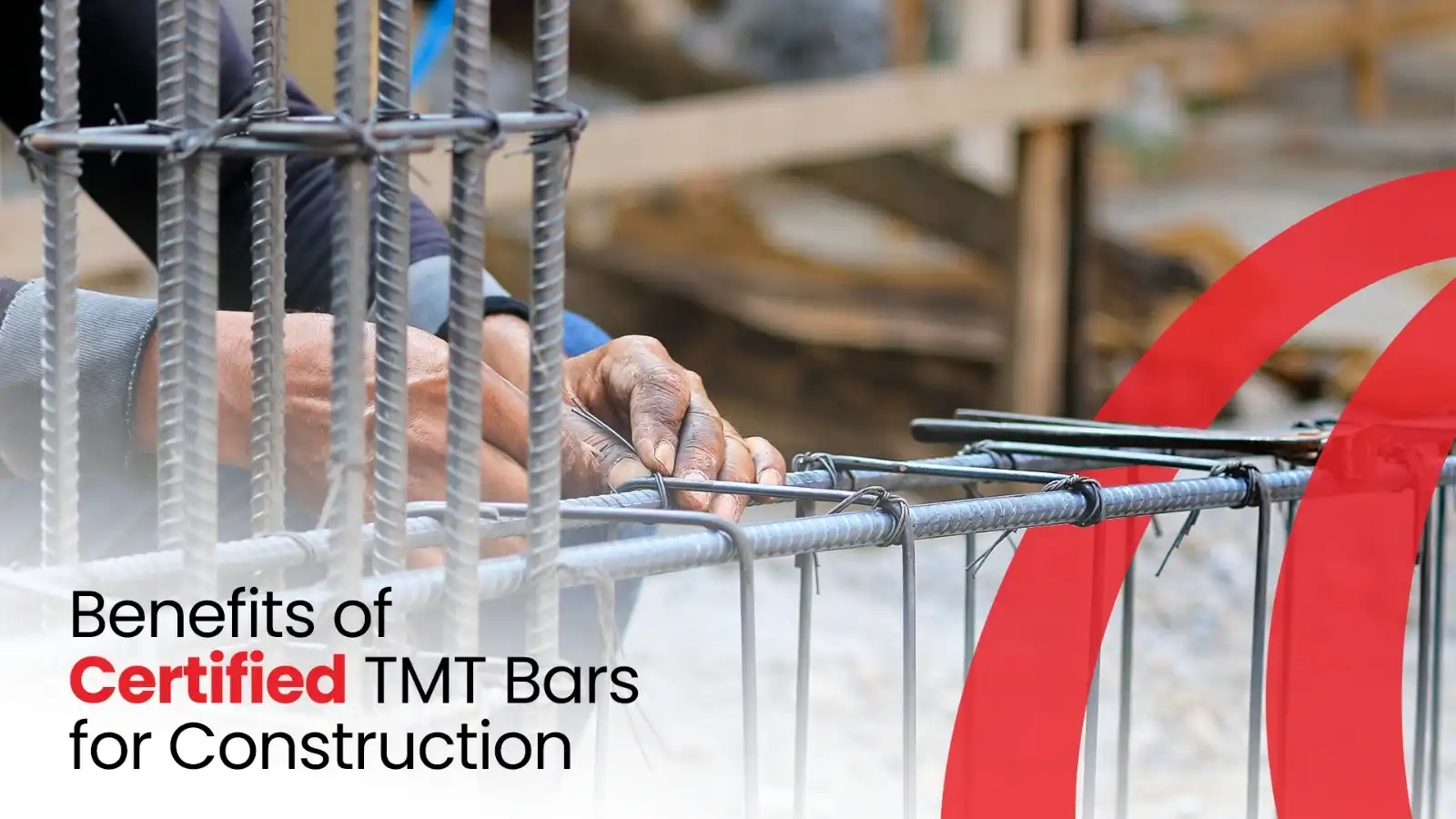
Benefits of Certified TMT Bars for Construction
The quality of materials defines the strength and safety with longevity of every structure in modern construction. Among these materials, reinforcement steel plays a crucial role in determining how well a building can resist environmental stress. It can also withstand load pressure and natural calamities. This is where certified TMT bars make a significant difference.
A certified TMT bar meets stringent national or international standards like BIS and ISO or brand-specific quality benchmarks. These bars ensure uniform strength and superior ductility with exceptional corrosion resistance. All these features make them indispensable in modern structural design.
Let’s explore how certified TMT bars provide long-term value and security in every project.
What Does “Certified TMT Bar” Mean?
Not every TMT bar available in the market meets approved quality standards. Certification verifies that the product adheres to strict quality parameters during production and testing.
Defining Certification Standards
The Bureau of Indian Standards certification under IS 1786:2008 is the primary mark of quality for TMT steel bars in India. This ensures that each bar meets defined chemical and mechanical requirements.
For guarantee process consistency and sustainability TMT bar manufacturers use ISO certifications including ISO 9001 and ISO 14001.
Adukia Industries is one of the leading TMT bar manufacturers that go further with brand-specific certifications. It maintains advanced in-house testing systems for uniform reliability.
Why Certification Matters
Certification assures that a TMT bar’s chemical composition and physical strength and manufacturing consistency are continuously monitored. Non-certified bars may look similar. But it often lacks the same quality control which will lead to unpredictable durability and safety issues. Certified products offer builders and homeowners confidence that every structure stands firm under all conditions.
Certified vs Non-Certified TMT Bars – Comparison Table
The difference between certified and non-certified TMT bars becomes evident when comparing their mechanical and structural performance. The table below summaries the core distinctions.
| Feature | Certified TMT Bars | Non-Certified Bars |
|---|---|---|
| Quality Standard | BIS/ISO Approved | Unverified |
| Chemical Composition | Controlled Carbon, Sulphur, Phosphorus | Inconsistent Ratios |
| Strength & Ductility | Tested for Uniformity | Variable Performance |
| Corrosion Resistance | High | Poor |
| Earthquake Resistance | Excellent (Especially 550D Grade) | Unreliable |
| Long-Term Safety | Guaranteed | Compromised |
How Certification Ensures Chemical Composition, Physical Strength, and Manufacturing Consistency
Every certified TMT bar passes through a controlled production process. Certification ensures that both chemical and physical attributes align with the required performance standards.
-
Controlled Chemical Composition
Certified TMT bars maintain optimal levels of carbon and sulphur and phosphorus to balance strength and flexibility. This prevents brittleness while allowing the bar to remain strong and flexible during load-bearing. Such precision directly influences the bendable and weldable qualities that define modern construction standards.
-
Verified Physical Strength and Ductility
Certification demands periodic testing of yield strength and ultimate tensile strength also elongation percentage. All these ensure the bar performs consistently under stress. Certified bars, especially 550D TMT bars are engineered for higher ductility and earthquake resistance. It makes them ideal for multi-storey buildings and seismic zones.
-
Manufacturing Consistency and Quality Audits
Certified TMT bar manufacturers operate automated and digitally controlled mills that track each production stage. Regular BIS or ISO audits guarantee that every batch of TMT bars meets national standards ensuring consistent quality and long-term durability across all applications.
How Certification Ensures Safety
Structural safety begins with material reliability. Certified TMT steel bars reinforce every structure’s capacity to withstand both environmental and mechanical challenges.
-
Structural Safety in Seismic Zones
Certified bars, especially Fe 550D TMT bars have higher ductility. It allows them to absorb earth shaking shocks and minimise structural damage. This flexibility is crucial for buildings located in earthquake-prone regions as it can reduce the risk of sudden collapse.
-
Fire and Corrosion Resistance
Nowadays, the importance of corrosion resistant TMT bars are increasing. Certified TMT bars undergo comprehensive tests for heat resistance and anti-corrosive performance. These properties extend the bar’s service life, even in coastal or humid areas where corrosion is a primary concern. The result is a stronger and more durable structure requiring minimal maintenance.
-
Compliance with Building Codes and Regulations
Using BIS approved TMT bars ensures full compliance with the National Building Code and IS 456:2000. Such compliance not just enhances safety but also simplifies project approvals. It also ensures legal adherence to national construction standards.
How to Identify a Certified TMT Bar
Distinguishing a genuine certified TMT bar from an unverified one is vital in today’s market. These identifiers help ensure authenticity and reliability.
-
Look for the ISI Mark and Manufacturer’s Identification
Every certified bar features an ISI mark, along with details like the manufacturer’s name and grade with the bar size. This embossing confirms that the bar meets recognised safety and performance parameters.
-
Request Quality Documents
Buyers should request Mill Test Certificates (MTC), which provide chemical and mechanical test results, as well as BIS certification documents. These papers verify the product’s compliance with quality and safety benchmarks.
-
Purchase from Authorised Dealers
Always purchase TMT bars from authorised distributors or brand outlets. This is to avoid counterfeit materials. Trusted manufacturers maintain transparent dealer networks, ensuring authenticity and accountability.
Conclusion
The foundation of every strong and enduring structure lies in the quality of its reinforcement. Certified TMT bars deliver the assurance of strength and durability and safety that modern construction demands. Their verified chemical composition and manufacturing consistency with compliance with BIS and ISO standards make them indispensable for reliable projects.
Homeowners and developers also the engineers should prioritise certified TMT bars from reputable manufacturers like Adukia Industries for structure. They are not only safe but also sustainable. As India moves towards a future of resilient infrastructure, certified steel continues to play an important role in shaping secure and sustainable buildings.
FAQ's
1. What does a BIS-certified TMT bar signify?
It indicates that the bar meets the Indian Standard IS 1786:2008, ensuring quality, strength, and ductility suitable for construction use.
2. Are 550D TMT bars ideal for home construction?
Yes, 550D TMT bars offer higher ductility and earthquake resistance, making them ideal for residential and multi-storey structures.
3. How can I verify a TMT bar’s certification?
Look for the ISI mark, manufacturer details, and Mill Test Certificates (MTC) to confirm authenticity.
4. Why are certified TMT bars more reliable than non-certified ones?
Certified bars undergo strict quality audits and comply with BIS or ISO standards, ensuring uniform strength, corrosion resistance, and longevity.
Written and Verified by:
Adukia Industries
Bio: Adukia Industries, established in 1971, is a leading TMT Bar manufacturer with headquarters in Kolkata, India. With over 50 years of experience in iron and steel manufacturing, they offer a diverse range of products including TMT Bars, Grey and Ductile Iron Castings, Sponge Iron, Ferro Alloys, Wire Rods, and ERW Pipes. Committed to quality, they adhere to international manufacturing standards and have a robust distribution network covering all major regions in India. With an annual production capacity of 1 million tonnes, Adukia Industries aims to deliver exceptional products and services to meet the diverse needs of their global customer base.