
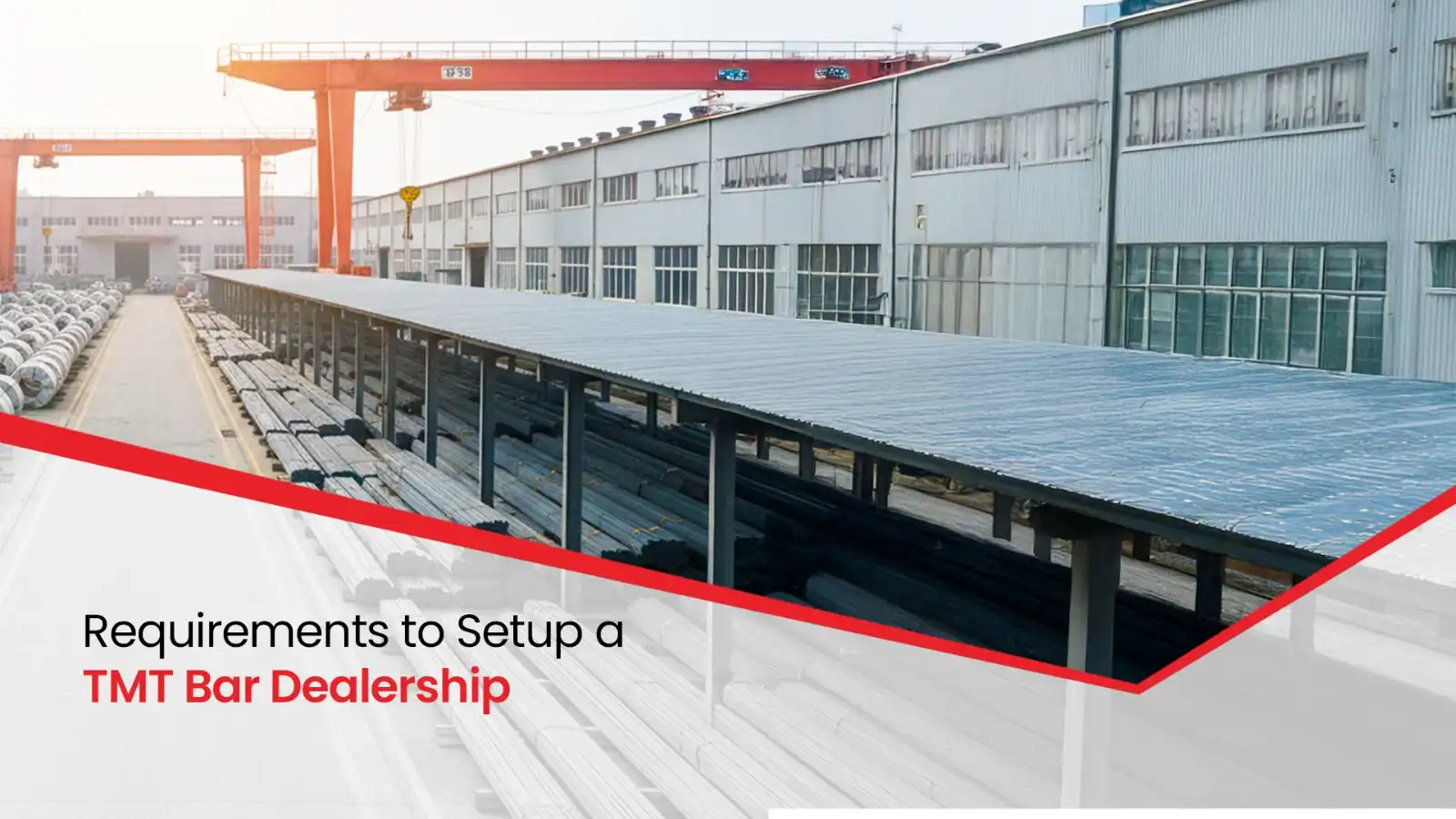
Requirements to Setup a TMT Bar Dealership in 2026
India’s infrastructure sector is witnessing a transformative phase. With mega-projects spanning highways, smart cities, housing schemes and industrial corridors, the demand for quality reinforcement steel in the form of TMT bars is growing rapidly.
This surge has positioned the steel dealership business as one of the most promising ventures in 2026. Becoming a TMT bar dealership today is not merely about trading construction materials-it is about aligning with the backbone of India’s development.
Let’s walk through the key requirements and documentation and also the strategic considerations to establish a successful TMT bar distributorship in 2026.
Understanding the TMT Bar Dealership Business
Before beginning, it is essential to understand the market landscape and the responsibilities involved in operating a dealership.
India’s steel consumption continues to rise steadily. It is reaching approximately 50.3 million tonnes in FY 2023–24, driven by rapid infrastructure expansion and housing growth. The TMT bar segment is expected to witness strong growth by 2026 with major government projects and private sector investments fueling demand.
As the market shifts toward higher strength grades, the need for efficient and reliable distribution networks has become vital. In this evolving landscape, TMT bar dealers play a pivotal role. They act as the bridge between manufacturers and end users like builders and contractors also the retailers. Their responsibilities extend beyond sales to include inventory management and secure storage with logistics coordination, and timely supply. Upholding product quality, maintaining transparency, and ensuring consistent service form the foundation of a successful and sustainable dealership business.
Eligibility and Basic Requirements for Starting a Dealership
Certain foundational elements must be in place to operate a compliant and competitive dealership.
-
Business Registration and Legal Structure
First, decide an appropriate business model. It can be a sole proprietorship or partnership even a private limited company, based on the scale of operations. Obtain all required registrations like GST and trade licence also Shop & Establishment registration. With all these you will also need PAN and Aadhaar verification. These legal frameworks help establish credibility with both clients and TMT manufacturers.
-
Location and Space Setup
The location of the dealership directly influences its accessibility and sales potential. A warehouse should be strategically located near construction zones or emerging residential zones with good truck access. A warehouse or yard must be well-ventilated and dust controlled also should be safe for heavy-duty steel storage. You might need at least 500 sq ft plus space for loading/unloading.
-
Financial Investment and Working Capital
Setting up a TMT bar dealership typically requires an initial investment between ₹15 lakh and ₹30 lakh. This investment depends on region and brand association. This includes the cost of inventory, transportation, rent, staffing, and marketing. Maintaining sufficient working capital during the first few months is critical to manage stock turnover, and also handle fluctuations in steel prices.
Documentation and Legal Formalities
Proper documentation forms the legal foundation of a dealership agreement.
Essential Licences and Certificates
The key documents required include:
- GST registration certificate
- PAN card linked to the business
- Aadhaar verification for proprietors or partners
- Trade licence and local authority NOC (where applicable)
- Shop & Establishment registration
Maintaining clear, transparent documentation demonstrates accountability and strengthens trust with suppliers and regulatory bodies.
Understanding the Dealership Agreement
Once the manufacturer approves the dealership, a formal agreement is executed. It defines areas like supply terms and exclusivity, pricing structure, delivery schedules, and payment norms.
Reviewing the agreement thoroughly ensures that both parties, manufacturer and dealer operate with clarity and mutual understanding. This will prevent any future disputes.
Infrastructure and Operational Setup
Strong operational planning supports consistent service and business reliability.
-
Storage and Handling Requirements
TMT bars must be handled with precision to avoid bending and rusting or surface damage. Warehouses should have raised platforms and covered roofing with adequate spacing between stacks for ventilation.
Proper handling techniques and protective measures maintain material quality and compliance with BIS standards.
-
Transportation and Logistics Support
Logistics play a vital role in ensuring timely supply to contractors and project sites. Dealers may either partner with transport agencies or maintain their own delivery vehicles. A dependable transport system reduces lead times and maintains customer satisfaction.
-
Skilled Workforce and Training
A qualified and well-trained workforce is essential. Staff must be proficient in handling materials and maintaining inventory and supporting clients. Many leading manufacturers, including Adukia Industries, offer product training and operational guidance to their dealers.
Choosing the Right TMT Bar Brand
Partnering with a reputed brand determines long-term credibility and business growth.
-
Assessing Brand Reputation and Market Presence
Select a TMT manufacturer with a proven record of quality and reliability and builder confidence. A well-recognised brand simplifies market entry and strengthens sales potential.
-
Checking Certifications and Quality Standards
Ensure that the brand’s products meet BIS and ISO, or equivalent standards. High-grade TMT bars like those offered by Adukia Industries, provide superior strength and ductility with corrosion resistance. It ensures compliance with modern construction requirements.
-
Understanding Manufacturer Support and Dealership Terms
A dependable manufacturer offers more than just supply. They provide transparent pricing and marketing materials, training, and consistent dispatch support. Such collaboration enhances a dealer’s ability to serve clients effectively and maintain competitiveness.
Conclusion
Setting up a TMT bar dealership in 2026 requires a structured approach. Success in this sector depends on professionalism and reliability and also partnership with a trusted manufacturer.
Adukia Industries, known for its certified TMT bars and extensive dealership network, supports partners through quality assurance, transparent business practices, and comprehensive operational guidance. Entrepreneurs who align with such dependable brands are well positioned to benefit from India’s ongoing infrastructure expansion and the promising future of the steel dealership business.
FAQ's
1. What is the typical investment to start a TMT bar dealership?
The average investment ranges between ₹15 lakh and ₹30 lakh, depending on scale, brand selection, and regional market conditions.
2. Which grades of TMT bars are most commonly used?
Fe 500, Fe 550, and Fe 550D grades are most in demand for residential, commercial, and infrastructure applications due to their strength and ductility.
3. How important is manufacturer support for dealers?
Manufacturer support-through marketing, logistics, and technical training—plays a crucial role in improving efficiency, credibility, and customer satisfaction.
4. Can a TMT bar dealership be combined with other construction materials?
Yes, many dealers diversify their portfolio with complementary materials such as binding wire or structural sections, provided inventory management and service quality remain consistent.
Written and Verified by:
Adukia Industries
Bio: Adukia Industries, established in 1971, is a leading TMT Bar manufacturer with headquarters in Kolkata, India. With over 50 years of experience in iron and steel manufacturing, they offer a diverse range of products including TMT Bars, Grey and Ductile Iron Castings, Sponge Iron, Ferro Alloys, Wire Rods, and ERW Pipes. Committed to quality, they adhere to international manufacturing standards and have a robust distribution network covering all major regions in India. With an annual production capacity of 1 million tonnes, Adukia Industries aims to deliver exceptional products and services to meet the diverse needs of their global customer base.